Religious Freedom
Brandon Baker's Journey From Ganja Smuggler to Cannabis Reverend & Why The Future of Medical Marijuana Will Be The Church
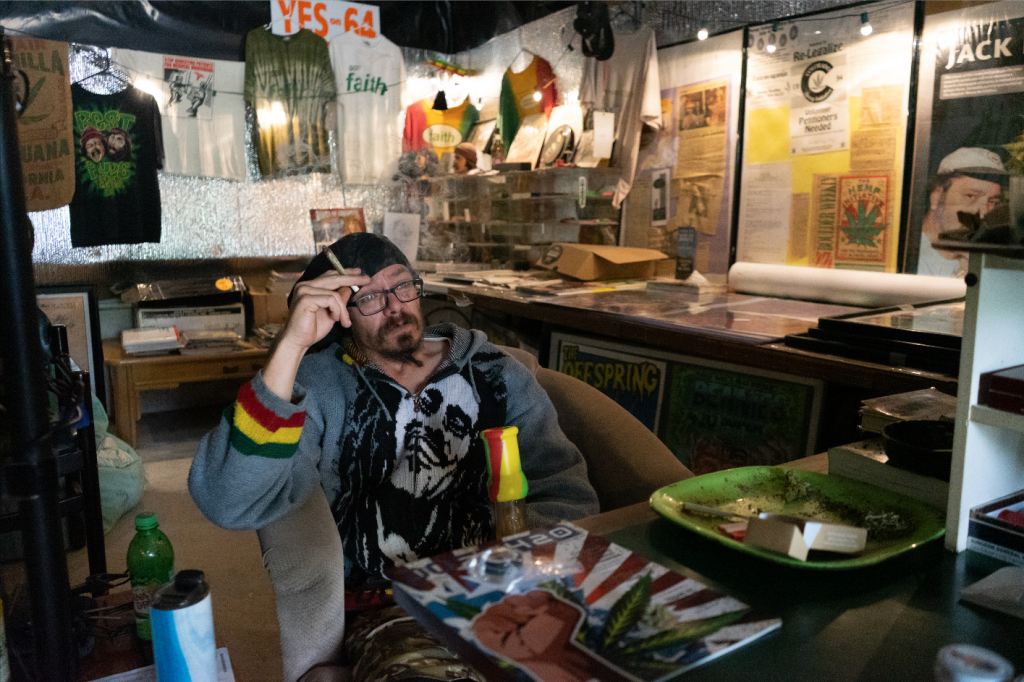
From Ganja Smuggler to Cannabis Reverend
"During Corona, I was partnered with some people with the Church here [in Colorado]. And they were more focused on essentially making sure they had a paycheck through Corona than making sure we had outreach and stuff like that. So we essentially closed down the Colorado Springs Church...And we expanded to Jamaica," begins Reverend Brandon Baker, founder of Green Faith Ministries, an international church of cannabis that has been legally recognized by both the state of Colorado as well as the United States Federal Government for the past 14 years.
Unlike many churches in the traditional sense, Green Faith does not require you to practice any particular faith, rather, it requires you to use cannabis in your practice.
"Green Faith's non denominational....We don't really care what your religion or your prayer is, as long as you're using Cannabis like righteously."
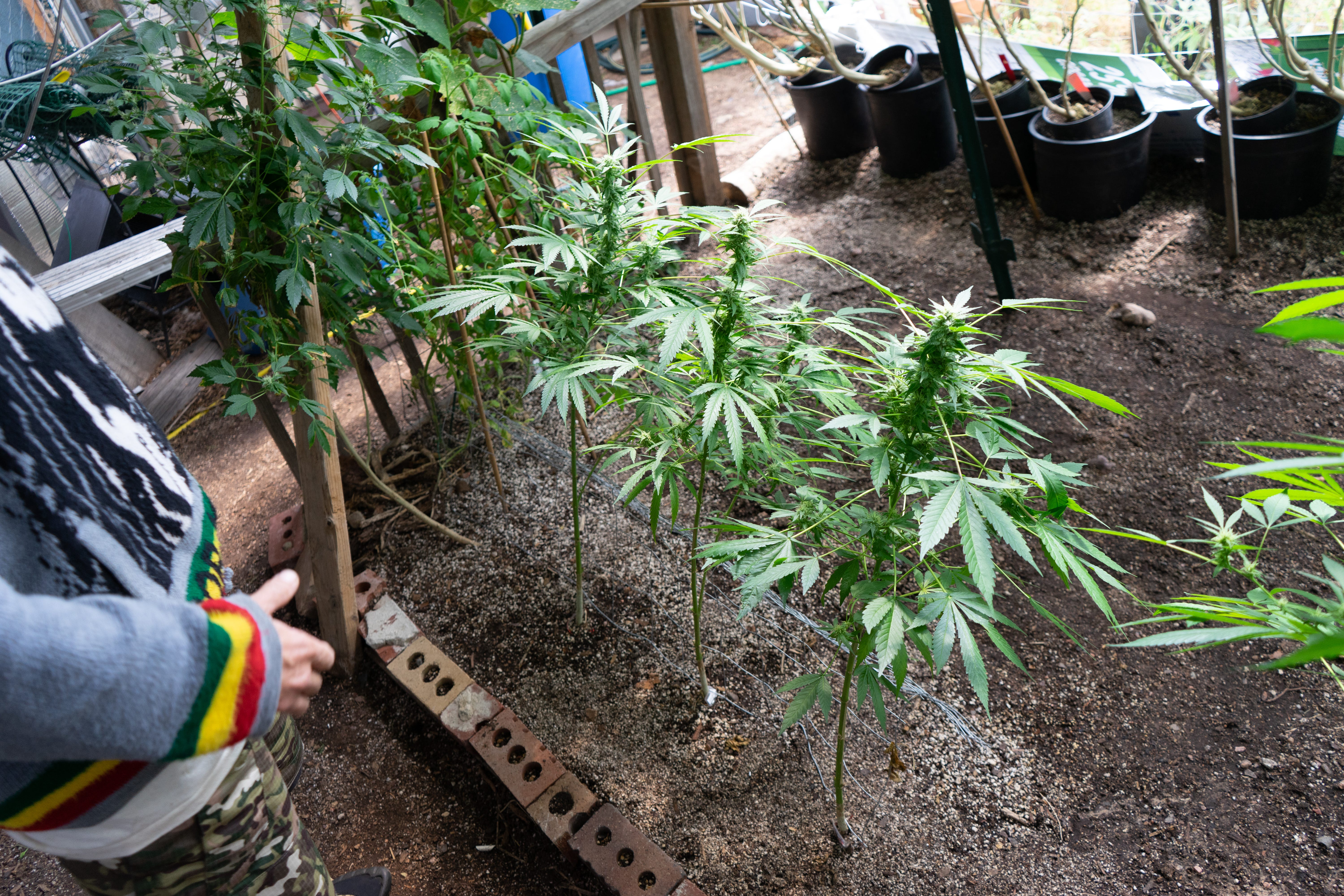
Born in Texas to a multi-generational family of cannabis farmers, Reverend Baker was introduced to the plant on his grandfather's farm. But, after moving to Wyoming, his path took a turn, and he dedicated his life to cannabis, founding Green Faith in northern Colorado in 2004, being ordained as a minister in 2005, and being recognized by the IRS and State of CO as a legal nonprofit in 2009.
"When I was a ganja smuggler, man. I got pulled over. I had tons of ganja on me. The cop's like, 'I smell weed.' And I was like, 'I've smoked weed. I've been a religious person,'" begins Baker, recalling one of the most pivotal moments leading to the path he has since followed.
Turning to God for help in a time of need, Baker offered his commitment to the church in exchange.
"I was like, 'Seriously, man, you get me out of this one, and I will turn my life over to service, work and outreach.' And that's where my community outreach [and] helping other people [comes from]."
Ever since, Baker has committed himself to spreading education and cannabis wherever possible, including a recent expansion to Jamaica.
With Green Faith Jamaican, Baker is not only working to grow the church, but also coordinating sunset reggae shows and working with local businesses like bed and breakfasts. In Jamaica, businesses have to be 51% owned by a Jamaican, and, in Baker's case, that is his partner, a local minister who helps get the word out about their efforts.
But growing in Jamaica presents unique obstacles, like torrential rains that can lead to molds, as well as high humidity which makes post-harvest a challenge.
On top of that, it is a challenge to properly dry and cure buds due to the high humidity. Growing in hoop houses helps avoid the rains, but education is still needed to improve the island's drying and curing processes.
"We pretty much do hoop houses...We don't use no light [or] waste no electricity or anything...And we're able to grow year round...The greenhouses are sealed, so that helps a lot with the heating and cooling. But it's humid in there...A lot of people trash Jamaica's ganja and it is literally just because they're drying and curing [methods are] outdated....They seem to dry and cure ganja more like tobacco than anything else...Getting moisture out of the buds is nearly impossible if you're not de-humidified."
Frustrated by social media's inconsistent policies and takedowns, the Reverend and his team are going back to basics, focusing on word of mouth and community connections for getting the message out about the church and the benefits it can offer its members. One of those benefits is access to quality cannabis for medical needs.
"My grandpa died in the 90s. And his family grew hemp. My dad grew kind bud all through the 70s, 80s, and 90s. And when he was growing it back then...most of his clients were sick people anyway. So I've always seen the whole medical marijuana [side]."
Among other programs and support the church offers, terminally ill members of Green Faith Ministry can gain access to free Rick Simpson Oil, a highly concentrated, full plant extract used in large doses by patients battling conditions such as cancer and HIV/AIDS.
"We have a free RSO program…You can get 10 grams of Rick Simpson oil...every month...If you're an adult and you're terminal, you can pick it up. If you can't get there because you’re terminal, your friends, family, anyone that passes by the Church can come and get what’s essentially our anointing oil."
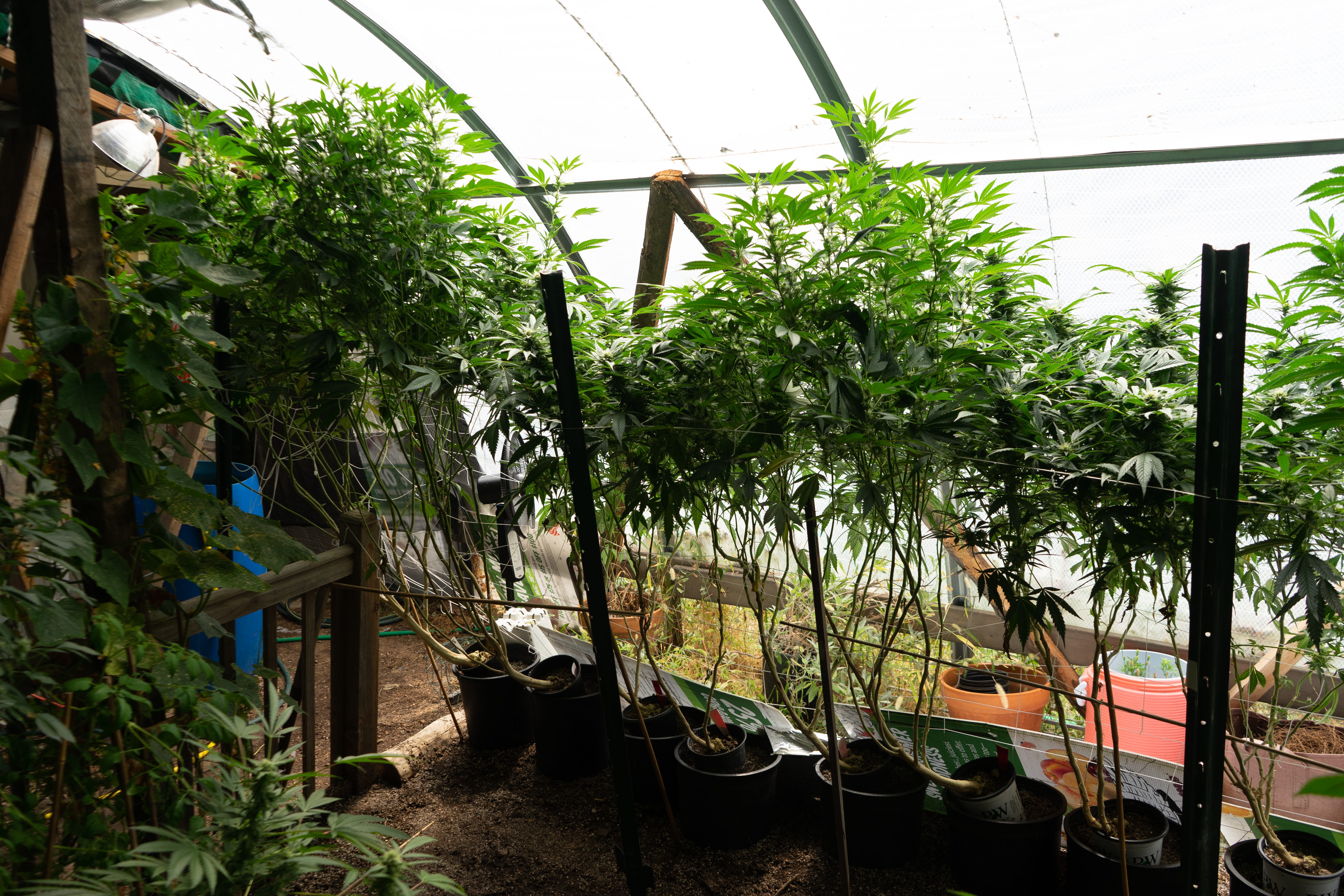
Green Faith's Ministry
The biggest struggles for many terminal patients are the cost and accessibility of RSO, which has become hard to find in shops as focus shifts away from medical markets.
"If it is [ available], then it's like concentrate…prices," Baker adds.
"You need to eat 10 grams a month...That's like minimum. [If you're eating] more like 30 grams a month, [you're] spending quite a bit of money. So, that's why we kind of have the program…If you're not terminal, you get access to it for [small] donations."
As part of being a church member, you have access to cannabis grown by the church and its elders members, and you are encouraged to participate in growing and producing for the church, both in education and in practice.
"If you're a member, then we're your caregiver. So if you're getting ganja from the Church, you're not supposed to be getting ganja elsewhere...[It's] supposed to be grown by the elders on Church property and in the Church....We have Church members help with it as far as your volunteer and service work and the training that comes with it."
Baker and the Church have even been sanctioned by the courts to allow people to do their community service hours with Green Faith.
"It's religion. It's our right. We've won it. But we just try to not stir the water if we don't have to man...But we ain't getting back down either."
A History with Cannabis
Living a life committed to cannabis and its religious use has not been easy for Baker, introduced to the harsh realities of the war on drugs at an early age.
"When I was like 12 and my brother was 13, [my dad] wasn't even home. And so when they raided his grow, they [served] a search warrant on us...Man, I literally grew up in the [drug war] battles...I can think back to elementary school talking about D.A.R.E. and all the lies…my dad was growing weed…I knew it healed people…[and] I didn't smoke weed until I was 15."
Then, in 2013, the state of Colorado legalized cannabis, a victory to many, but an insult to people like Baker who had spent years of their life fighting for religious access.
"It was kind of spit in our face because we fight for ten years to have the right for ganja, and they're like, ‘No, no, no, no.’ And then they're like, shit, every adult can have ganja. And we're just like, ‘Are you serious?’"
After a few years, and a growing distaste for the direction the world was headed, Baker pointed his compass towards Jamaica.
"When Corona hit, I closed down a lot of shit here because I just seen a lot of hatred and greed in America, man. And I was like, I don't really want to be caught up in this. So, I went to a more humble place to kind of do some outreach and soul searching...To me, that was just how I dealt with corona and all this stuff going around. I just went and seen positivity and did outreach somewhere else...[In] Jamaica, there's too much real shit going on to get in these battles over superficial stuff."
In spite of the hardship, Rev. Baker is committed to his mission of equal rights, access, and justice for all cannabis farmers and consumers.
"I just still want [the same] equal rights and justice for everyone that's pro cannabis that all the dispensaries and big wigs get...But also I want to advocate that it ain’t just about growing ganja. We need to be growing food and living more simply...So much of that we can just do at home and in a community."
The Church helps support members by growing vegetables, but doesn't raise livestock other than a few chickens kept for eggs.
"The majority of us are vegan and vegetarian...Eating healthy, living healthy...Our biggest thing is [to] not grow too much."
Baker worries about gluttony and excess, especially having seen it corrupt individuals firsthand in his own church.
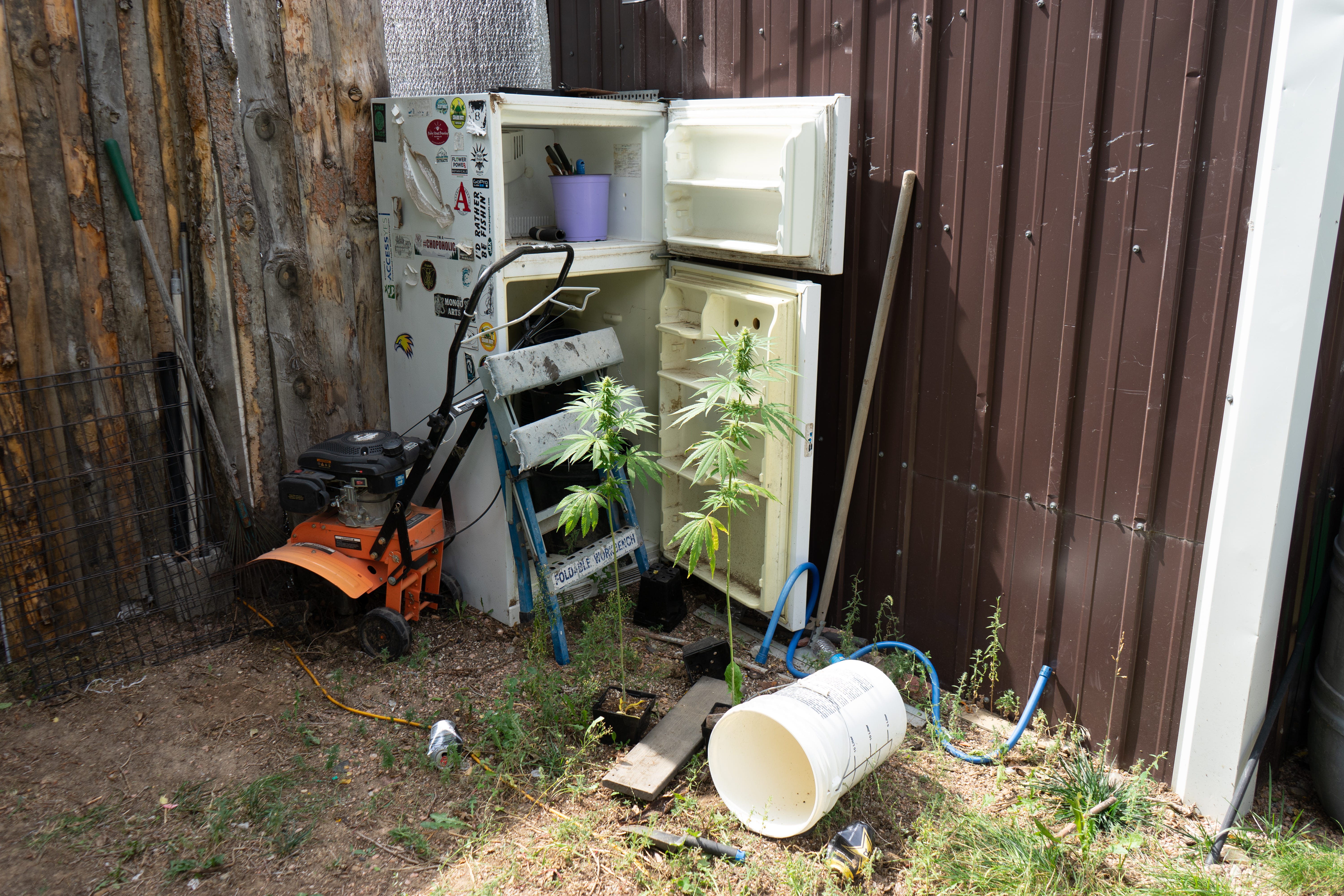
"If you're a Minister...you take a vow of poverty...You ain't going to be sitting with all kinds of money in your bank account...You pay your bills, and once your stuff's taken care of, essentially you give out [the rest]...There's a lot with less...When one of our ministers starts driving a Lexus...I'm like, ‘No, man.’ Every other Church, it's alright. They have the Caddy or the Lexus for all the ministers. But to me, that's [money that could feed] someone that's starving...You [can] still take care of yourself before you take care of others...[Just] don't be greedy."
Outside of managing others, one of the most stringent aspects of Baker's work surrounds the church's treatment of cannabis, and Baker's attention to how the plant was grown.
"The only thing I've had to be really strict with the rules and stuff for the Church is...with the ganja stuff...I want to know what's in it 100%. Even like anything from the Church, I'll let you know if it's ours...We don't have no bad people...I just can't personally attest that it's...up to our standards [if] it was donated."
For this reason, Baker is also selective about what he grows, and has been a longtime ETHOS fan, dating back 15+ years, even being among the first to grow ETHOS Autos.
"I've been pretty much a Colin guy since 2007-2008...In Jamaica, it's all ETHOS Genetics. I just can't trust the local seed...I've stood by Colin and ETHOS...from when he was a caregiver in a house...I had autos from him in like 2008-2009 and they were massive, but they were still like normal autos. And now these new autos are just a whole 'nother level."
Baker's ETHOS harvests have landed him in multiple magazines, but he had to stop submitting photos due to the increased attention and tourism it drew since the Church cannot offer cannabis to non-members.
"I've had like 3 centerfolds and A+ graded buds from any time I've been reviewed with Colin's strains," recalls Baker, saying that he’d often enter to see how the Church stacked up to the rest of the market.
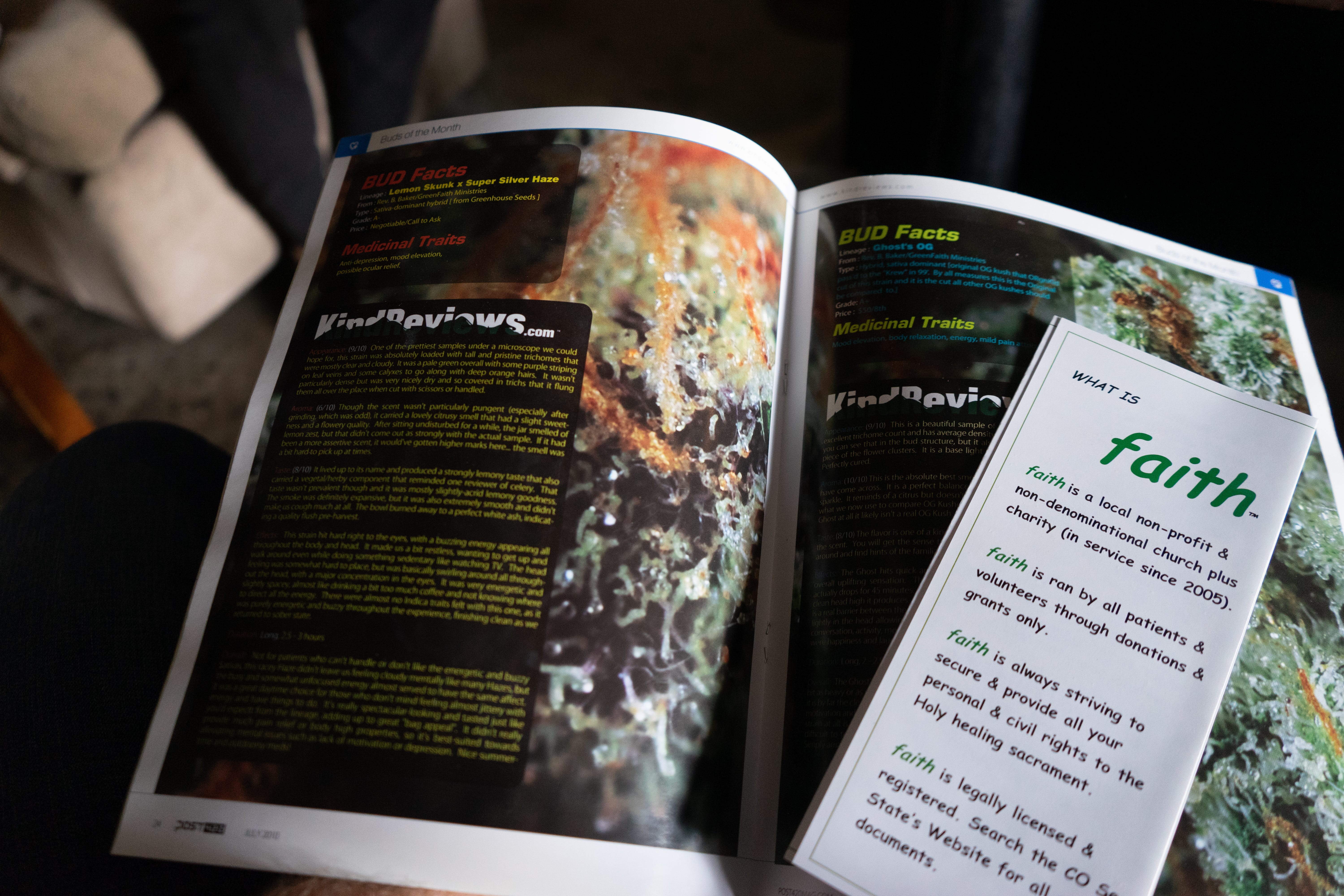
"I honestly quit it because...I get all these great ratings in the centerfold, then random people from all over the country start popping up at the Church...I'm like,’Sorry...You have to join the Church’...You can't [just] show up...Religion means you have set stuff that you believe in, and you're free to do that...You're already believing...You don't make it up on the fly, man."
The Future of Medical Cannabis
Out of our entire conversation, there is one prediction that has continued to stand out since we hung up: Once cannabis is legalized recreationally, Baker believes the future of medical cannabis will be churches like Green Faith.
"Most patients I know...haven't even renewed their cards...They have access without...I see the Church being the future of medical marijuana…like all churches."
A bold prediction, but one that is backed up by years of leading a cannabis church that other religious institutions have come to for information and guidance.
"We've had baptists and all kinds of Church leaders come and meet up with Green Faith...The Church of England invested in medical marijuana...They're seeing viability of it as healing as well as revenue growth...Essentially, Rec will be at the grocery store and the gas station, and then for Holy Healing, you go to Churches...That's my theory man. I have a good [track record] of picking stuff because even as a kid, they called me 'The Prophet' or 'The Preacher,' because I'd always be telling people stuff...5-10 years later, I'm like, 'I told you so.'"
In line with this prediction, Baker is focused on helping other churches follow in Green Faith's path to make religious access available to as many people as possible.
"I've actually helped four other churches in the last few years...I show them the forms and everything we did for Green Faith...You have to believe it, but then you also have to file documents and paperwork...It's a doable thing...I don’t see it as a business, so they're not competition to me, man. We’re like Habitat for Humanity; The more houses you build, the better off...There's a lot of work [to be done] building all the houses."
Subscribe to our Substack to receive new content automatically
This article is featured in Vol. 6 of The ETHOS Magazine.
Grab a collector's edition of the ETHOS magazine in print HERE.