The King of Lighting
JAIR VELLEMAN'S WORLD OF CANNABIS
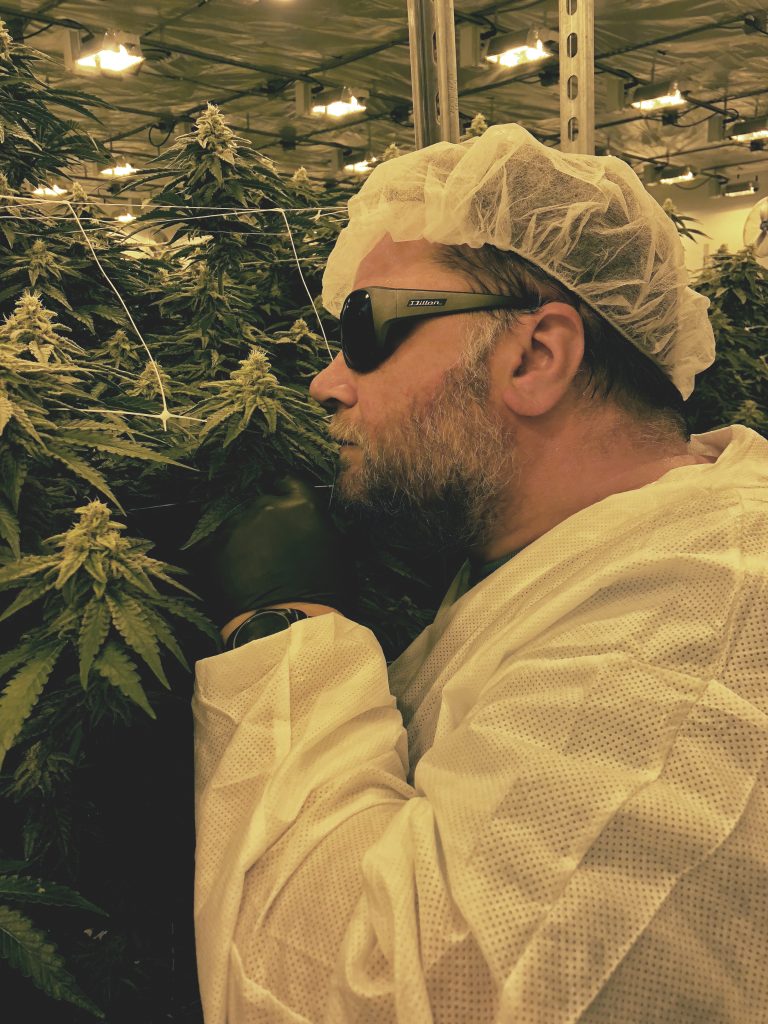
Jair Velleman is a cannabis professional with more than three decades of experience in the industry, best known for building Gavita into the largest horticultural lighting company in the world, as well as his contributions to cannabis culture at large.
Velleman helped to revolutionize the cannabis cultivation space by bringing industrial growing methods to a global scale, investing in western markets like Humboldt, California, and preserving the contributions and history of those before and after him through the World of Cannabis museum. He is also the owner of one of California’s largest cannabis distributors, Lbs. Distribution and co-owner of DabStars, a cannabis lifestyle brand.
“I’m just some dipshit grower that ended up being a very successful businessman,” says Jair Velleman from his Amsterdam residence, the beginning of a fascinating and entertaining story of success in the world of cannabis.
The Early Years in Holland
Velleman is a native of Holland, who was born and still lives in Amsterdam. Due to the area’s favorable treatment of cannabis, Velleman was exposed to cannabis at the young age of 13. Having made many connections locally as a youngster, he was a regular at coffee shops in his teens, playing pinball and smoking joints back when the industry wasn’t as strict on age checks, something he says is no longer possible.
“The first time I entered a coffee shop, my first joint was when I was 13,” Velleman recalls. “I am a very hyperactive person. These days they call it ADHD; those days we were just active kids. So, I smoked weed to kind of balance myself, and I did that from a very young age and I kind of still do that ... And I liked weed; I always liked weed.”
Growth Spurt
“At a certain moment, I wanted to grow,” explains Velleman.
“I was 16, still living with my mother, and I talked my mother into growing weed. We started with 300 plants and a bunch of land inside the basement of my mother’s home … we were growing for a coffee shop in Amsterdam that gave us the genetics and the clones.”
That first grow was a sea of green indoors with 1000W lights.
“It was low tech. Nice, but low tech,” remarks Velleman. “That was my first experience with weed. That’s when I entered the industry as what these days we call a ‘legacy grower’ … used to be ‘black market grower’ but the politically correct term now is ‘legacy.’”
Velleman was a legacy grower for decades, holding a “normal” job so that he could keep a low profile.
“I held a normal job … wearing a suit as a salesman. In the evenings, I was taking care of my grows.”
His grows started small, but gradually multiplied in quantity and size, something that he hasn’t been able to discuss openly until now due to the statute of limitations surrounding legacy activities.
“I’m very happy that I can talk to you and tell you about this because of the statute of limitation,” he says to me. “The police can’t do anything now, but I was a black market grower in Amsterdam and Holland for a long time.”
Start Small; Grow Bigger
Velleman reflects on his years of legacy growing, discussing his motivations for partaking in the industry.
“[Growing] was financially interesting, and gives you cheap weed to smoke,” he laughs. “Those two things triggered me. I enjoyed growing those plants.”
Velleman entered the cannabis industry at the age of 16 with his first 300-plant grow. 31 years later and he’s still living in Holland, but he’s not growing at home anymore. Instead, he’s focused on the legal cannabis industry, grateful that his legacy efforts have not prevented him from being an owner-operator in California’s legal market.
“Growing weed in Holland is very illegal,” Vellman reminds. “Of course it is kind of scary. I never got caught.”
Well, technically he got caught once, when the cops accidentally raided the wrong place for the wrong reasons and had to drop the charges. “I got caught once with a small grow with a very small amount of lights … The charges were dropped because of privacy laws and how they got their information.”
Velleman’s lack of cannabis charges allowed him to enter the United States and work in cannabis.
“Any charges would have ruined my chances in legal cannabis,” he reiterates.
Starting a Hydro Store
Before his rise to success years later, Velleman began modestly with the help of a small hydro store in a little town outside of Amsterdam. Velleman would frequent the shop for supplies, but the store was always closed. He sat down with the owners and asked them to let him be a partner, manage and open the store, and get real customers coming in the doors.
“So, I start this hydro store. There is no money in that,” he explains. “You don’t get rich owning a hydro store. It’s a great way of trying to be in the industry, but it isn’t really kicking off.”
But something occurred to Velleman that had not occurred to his partners: the United States was going to be big for cannabis. His partners and everyone he knew thought he was crazy.
“Sitting there and not really knowing what I want to do and I get this crazy idea in 2007 that I think something is going to happen in the United States and my partner and everyone around me says I’m crazy,” he recalls. “[They said], ‘If you go to the United States, you get 30 years in prison. It’s all bad. Don’t go to the U.S.’ We were watching things like Cops on TV; Our idea of the United States was Cops and Jerry Springer.”
Refusing to take no for an answer, Velleman bought plane tickets for him and his girlfriend (now wife) and they flew out to San Francisco to check out a “little hydroponics show” that is now known as Maximum Yield.
Maximum Yield
In 2007, when Velleman first attended Maximum Yield in California, the show “wasn’t even filled” and he recalls there being maybe 25-30 booths.
“I walk in … [mind you this is] still my industry, and I don’t know anyone there,” Velleman recalls. “There were no other Dutch people. No other people from Europe. I was the only guy from Europe wandering around,” he explains, something that was shocking at the time given Holland’s rich history of cultivation, both cannabis and in general.
Velleman wandered the show and ended up finding a ballast company called Lumatek, a company that doesn’t exist anymore. They manufactured a “big purple digital ballast”, something that Europeans did not have access to.
Velleman and Lumatek struck a deal to import the ballasts to Europe and began wholesaling to hydroponics distributors, splitting the goods imported among a variety of European countries. In doing so, they also began building a customer list that would help catalyze Velleman’s future efforts.
“At a certain moment in business, you are going to get screwed.”
Velleman helped Lumatek grow to $5-7M in annual revenue from ballasts alone. But as things began to kick off, the relationship became strained. Lumatek attempted to bypass Velleman’s distribution network and go directly to his biggest customers, believing that this would be bad for Velleman and would allow them to take over that share directly.
“You can’t kick us out,” Velleman recalls telling Lumatek. “We are too big of a part of the company.”
Velleman and his partner decided to take the loss rather than share their customer lists, taking a large hit, but maintain enough income to stay afloat. They never ordered from Lumatek again, nor did they tell them who the customers were.
“[I said] ‘Ok, I will take the hit, but you will also take the hit,’” explains Velleman, whose business went from doing $7M in annual revenue to $2M. “I promised them that if I had the chance I would kill their company ... War has always been a great innovation for pushing boundaries.
If someone wants war, it is great inspiration; it works amazing.”
Velleman kept his head down and kept going with his wholesale distribution efforts and began marketing different brands that were bought or created in house. His efforts were enough to gain the attention of Holland’s horticulture industry.
Aalsmere & Gavita Nederlands
For those that don’t know, Aalsmere is a world-famous region of the Netherlands known for its flower cultivation, situated in a country known globally for its horticultural prowess.
Even in a native such as Velleman, there is a visible deference and respect when describing the feeling of being invited to this monument to professional horticulture.
“Holland has a huge horticulture industry, you know,” explains Velleman. “We’re the second biggest food producer in the world from a land mass as big as Humboldt county.”
As a result, Holland has evolved into a leader of innovation in horticulture technology. “At a certain moment, we got a request from a company in Holland,” recalls Velleman. “[Holland is] where big greenhouses are built, where the flower auction is, where professional horticulture is based.”
Velleman’s invite came from none other than Gavita Nederlands, who had taken note of his methods and customer base.
“[Gavita] understood that I found a new route selling high-end products for cannabis growers,” says Velleman. “[At that time], growers bought cheap shit because cops would bust them and they didn’t want to invest … But I was selling high-end equipment.”
Velleman predicted that if you could convince more experienced growers to invest in higher-end equipment, and they could see the results, that others would soon follow and the demand for higher-end products would increase.
Gavita showed Velleman their high-end, double-ended 400V HPS lights with all of the bells and whistles and asked for his impression. Velleman’s first question was if it could be converted to a 240V setup so that growers could use it. Second, he wanted to know if there was a way to automatically dim the ballast when the room temperature reached a certain point.
The result of this meeting would be the foundation for Gavita’s global expansion and category dominance for years to come.
Gavita Holland
“It took two years but we solved [both],” boasts Velleman. “Dickie,” Velleman’s contact at Gavita, had had the company for 25 years already and they were doing around $12M in turnover. Velleman was determined to do $20M but wanted a piece of the company, something Dickie would not relinquish.
“He says, ‘Hey man, I like you, but I am not going to give you part of my company.’ So I said, “Hey man, I like you, but I am not going to work for you,’ and I set up a new company, Gavita Holland,” Velleman explains, creating similar monikers on purpose so that people thought they were the same (or related) companies.
“When I set it up, Dickie came to me and said, ‘Jair, how much do you think you could sell annually?’ And I told him $20M. You have to understand, he had the company for 20+ years and was doing 12 ... I got some giggles. People looked at me funny, but [they said] ok, go and do it.”
Redeveloping for Retail
While Velleman was confident in Gavita products, they were designed for commercial use and needed to be redeveloped to bring to a retail market, including retail packaging.
“Normally, lights were sent to a greenhouse, 30k lights at a time on big racks in a trailer,” Velleman explains. “We had to make retail boxes. They wanted just brown boxes; you can’t do that. I had to explain to them what retail was. And then I took the light to the U.S.”
While Velleman’s exposure to cannabis had been largely based on Holland’s professional horticulture, everyone in the United States was “growing in a black market way.”
“No one was going professional,” Velleman continues. “They were running air-cooled hoods with lights super close to the plants … They did everything wrong. I had to go and try to explain to people who have already been growing for 20-30 years and tell them everything they know is fucking bullshit and they have to try over.”
Because of California’s dominance in cannabis, Velleman decided to start spreading his gospel there, in the heart of Humboldt.
“California was the biggest market. If you want to start, you go there,” Velleman says. “In those days, Humboldt was the hub. Everyone told me, ‘If you want to sell your product, start everywhere except Humboldt. They are set in their ways; you won’t change their minds.’”
Velleman took that as a challenge.
Humboldt County
Contrary to all advice he had been given, Velleman made a point of making Humboldt County his destination for his first seven sales trips.
“I walked in ... I went to old stores. I also went to old growers,” Velleman recalls of his approach. “And I think I gave away 50 lights in total.”
At the time, no one was giving away high-end growing equipment. And the old-school ways of legacy communities like Humboldt were far from the ones investing in the latest and greatest. Velleman understood that if he could convince these growers of the value his product offered, then word of mouth would do the rest.
“I’d pretty much walk into a grow and say, ‘Hey man, those lights, the last three lights on that row, hang my lights. They’re free. But instead of hanging them close, I want them run all the way up to the ceiling.’ People would say, ‘You can’t be fucking shitting me.’”
At the time, most growers were yielding 1-1.5 pounds per 1000W light and were using an insane amount of electricity. People were hanging lights too close and were taught by the wrong people, Velleman claims.
“Dutch growers get taught by horticulture; The US got taught by influencers,” jests Velleman. “It took months and months and months [to convince growers]. I’d come back to the grower, give them a few 600W lights, and after three months, I’d come back to the customer and their eyes are wide, saying things like, ‘I yielded more under the 600W you gave me than the 1000W lights [they replaced].’”
Not only were grows becoming more efficient thanks to Velleman’s efforts, but they were seeing significantly higher yields across the board, especially when completely converting the entire grow to Gavita.
“I had a couple people to run all of my lights as a test. Those people went up to 2.5-3 pounds per light. This is not a small difference.”
“Not a small difference”
The cultivation approach that Velleman brought with him was about more than buying and selling better lighting equipment; he taught them everything he’d learned as a Dutch grower.
“The way I taught people was with rolling benches, lighting, etc … It was the professional way of growing, and it was so much fun,” beams Velleman.
“People were smiling … Slowly, I got around ... Humboldt growers started using my system of growing. It wasn’t just a light; I taught people how to grow. I taught them how to grow commercially.”
That was a huge thing. Thanks to Velleman’s tactics, growers were shortening flower times and doubling and tripling yields.
“It was an amazing vibe in Humboldt.”
As the industry began to grow, salesmen for a variety of lighting and equipment manufacturers would come to Humboldt and try to sell to growers using inflated metrics and flash jargon. Velleman’s approach was the opposite: underpromise, overdeliver.
“[Salesmen] were all coming to Humboldt telling growers, ‘Hey bro, I have these lights. Better weed. More taste. Better yields. Etc.’ I underpromised my product. When I talked to growers, I said you will only get 20% more. The reality is that it is more, but if you’re a real grower and someone comes in and says 100% more, you hear that bullshit all the time. Every bullshit American company says that. By the time I came in, people were sick of the product [pitch].”
Velleman was well aware that legacy growers would be the first to call bullshit on marketing stories, and even though he undersold, the metrics were enough to get the attention of growers who did the math on annual yields.
“I undersold and underpromised … I’d tell them 20% ... 20% is a lot if you make the calculation on annual yields … and the reality was that it was 100%-200% more yields.”
As a result of these tremendous increases in yields, Gavita began to take hold in Humboldt, and garner a cult-like following.
“I remember on some of my first trips, going to Humboldt and people saying ‘Come up to my mountain.’ I’m a Dutch kid,” continues Velleman. “Some dude in a camp jacket is like, ‘Want to come up to my mountain?’ ... 45 minutes on a gravel road later with a couple guys on 4x4s, armed with guns and faces covered ... I remember going up those roads and being like, ‘I am never coming down; this is it, man.’ It was this crazy Wild West vibe, but it was cool.”
Back in those days, Velleman became somewhat of a celebrity in Humboldt, and eventually throughout the California market. Gavita’s lights combined with Velleman’s know-how was the recipe for exponential increases in yields, which meant more money, which meant happier customers who wanted more of whatever he was selling.
“Humboldt kickstarted my career...[I’d have] my Gavita jacket on and everyone would be so happy; people were making 2-3x the money they were making before,” explains Velleman. “When I walked into local bar, people would crowd me. I would get drinks all night long. For me, it was amazing. It was fun. I was bringing in new, first-to-market technology.”
Helping Growers Grow Better
While the goal of business is always to generate revenue in at least some capacity, Velleman’s primary motive was to help the growers he worked with grow better, so that they could reap more rewards from their work, and live better lives.
“The reason I did this wasn’t specifically to make money,” cautions Velleman. “Of course I wanted to make a living, but the idea was that I want to help growers to grow better yields, have more yields, and have an amazing time doing it, and I could travel the world. I never [thought about] where I would be 5 or 7 years from then.”
This approach worked, and slowly, the “cult following” he’d amassed started flowing through the rest of California and the United States, but at a cost.
“I created biggest lighting company in the world and the first five years, I had no sales team. It was just me. Until I almost died, and had to get a team,” laughs Velleman.
Copycat Syndrome
As business continued to grow from pallet orders to container orders and beyond, competitors took note, and began copying Gavita’s lights.
“Slowly, everything started to develo … one pallet order, then first container … bigger and bigger. Then, something happened that is [stereo]typical U.S. … We were real successful and the nation was catching on; everyone started copying me. If you are successful in the United States, no one is being original; competitors went to China and started copying me.”
If you recall, the light was only one half of Velleman’s master plan with Gavita; the dimmable ballast controller was the next piece to the puzzle. The new digital controller would dim the lamps when the room got above a certain temperature and would have to work perfectly, and the launch timed just right to avoid further copycat issues.
“We waited with the launch of that little device until everyone copied us and got their containers [of lights] in. Then, we dropped the new device. It wiped the competition off the earth. It fucked up their money. They were stuck with old inventory, and now we had a new device that blew away the competition.
Gavita Holland continued to grow to the point where production couldn’t keep up with the orders and there would be no stock left in the United States.
“One moment I got to the point that I was just holding on for dear life; the company got bigger than me. I have never seen a company sell so much gear that production couldn’t keep up. We were selling more than we could make. We were receiving two containers a day and couldn’t keep up. It wasn’t enough. There was no stock in the U.S. left. So we chartered entire freight planes, filled them with Gavita and flew them to the U.S.”
Prototypes, Trade Shows, & Ethos
While he can’t put a finger on the specific time, Velleman’s trade show circuit during his tenure with Gavita Holland would introduce him to Colin Gordon, founder & CEO of Ethos Genetics.
“Somewhere in beginning, I ended up in Denver, Colorado. I still wasn’t huge back then,” recalls Velleman. “I was developing all kinds of products and I met Colin. I don’t even remember how. We bumped into each other and hit it off. He was in the beginning of his company and I was in the beginning of mine.”
Forming a common bond as up-and-comers in the space, Velleman offered Gordon a chance to test out his gear and “prove” that Velleman’s technology worked.
“When you make a lamp, you have to give prototypes to growers. I would send Colin prototypes of new tech and he would test it out, and it was good for Colin because money wasn’t flowing from the roof. I’d say, ‘If you like it, tell other people.’”
Over the years, Velleman got to know Gordon and his family, even attending parties together that would lead to business deals later on.
Velleman says that people often ask him how he does business. Laughing, he responds, “We do business in strip clubs in this industry. I’ve done million dollar deals in strip clubs ... mostly when I’m really fucked up. I’m a little bit older now, but, yes, I still conduct business that way.
Having kids kind of slowed me down, but you don’t die off.”
Those business deals helped Velleman grow to a point where Gavita Holland had outgrown its “parent” company.
Companies Buying Companies
Over the course of his tenure, Velleman’s Gavita Holland grew to global revenues surpassing $200M annually, and the time had come for a change in structure.
“I told Dickie … we were 15x bigger than the mother company and it was time to have the discussion; it was time that the sister company buys the mother company. That’s how I got a part of it all,” Velleman says.
After the acquisition, Velleman started traveling the world even more, including Africa, U.S., Europe, Russia, Australia, Japan, New Zealand and all of the places where Gavita was sold.
“We were in every continent; truly international,” he says. “It was fun to learn how to run a big company; it was a big life lesson … Enjoying ourselves, great crew, great team … I miss that … that vibe, that grass roots vibe, where everything is perfection and everything just works and people just love you. It creates a culture around you and your company.”
Similar to Apple’s cult following, Gavita’s cult following with origins tracing back to Humboldt had created loyal customers that loved the product, making it ripe for acquisition. But, not just anyone can buy a company of this size, nor was Gavita outwardly soliciting offers.
“You build [your company] up to really big size, almost too big ... In your head, you think, ‘I would like to maybe sell this company in the future,’ but if you have a company that size, not a lot of people have the money to buy you. That’s an issue.”
But after nearly eight years at the helm and one near death experience, Velleman was approached by two serious buyers.
“At a certain time, it was a hedge fund on one side that wanted to buy cannabis companies and put them together ... and on the other side we had Scott’s Miracle Grow who was making new department in ancillary businesses for the cannabis industry, but something that would fit [the] Scott’s Miracle Grow [brand].
But Velleman wasn’t sure. He knew that if he didn’t sell, a company like Scott’s would be his biggest competition, and they had much larger budgets than he did. He also knew that there might not be the opportunity to sell in the future as the space became more saturated.
“I wasn’t even really into ‘I want to sell my company now’ but the number comes in and someone pushes a little paper to the other side of the table and the number says, ‘Yeah, you better do this.’ ... If I wouldn’t have sold to them, they would have been my biggest fucking competition. And their money is way bigger than my money. If I don’t sell, I have to fight like hell afterwards, and I’m not sure I could sell the company in the future.”
The Hawthorne Group
Gavita was officially acquired and transitioned under the Hawthorne umbrella, SMG’s ancillary cannabis division. Velleman worked for corporate for two years before he got his earn out and was able to retire with all of the perks of the deal, including the ability to see how large, publicly-traded companies think about business strategy.
“It was very interesting to work with corporate for two years,” Velleman says of his time at SMG. “It was a big lesson as well in how to make money big style, American big style … how to sit in a board room and have discussions about how it works in a publicly-traded company and how stock going up is part of the whole strategy.”
Velleman recalls the transition from owning his own company to working with and for a large conglomerate being one of the toughest parts next to realizing it was no longer his company.
“It’s not the most fun time; it’s rough as an entrepreneur to work for someone else. I remember sitting in board rooms screaming and not agreeing with lots of things ... If you sell your company, it isn’t really your company anymore.”
But he also recognizes the benefits that come from a successful exit strategy, including security in life and less of an urgency to spend the day working.
“By selling the company, I’m good now. It was kind of nice to sell the company and buy a nice house for my family and to secure my personal family ... My kids and wife will be good for the rest of my life … It mellowed me out. You’re always running in conflict, in the rat wheel, turning over, and I was not there anymore and I kind of felt very relaxed.”
More Money, New Problems
While the security that came with the sale of the business was nice, the lack of direction was overwhelming. Velleman quickly realized what money truly buys: time.
“The nice feeling about having a bunch of money is that you’re not in the race anymore,” Velleman explains.
“Money doesn’t buy happiness. Money doesn’t buy friends. But money buys security. And money buys time.
“I don’t care about big houses and fast cars. When I sold my company I bought two dumb cars and a big ass house. It takes a few years to figure out, but I sold my super car with 500 miles on it. You figure out a lot of things are dumb and don’t bring happiness in life.”
Velleman had to figure out what brought him happiness. Having accomplished his primary goal, he was left aimless, searching for a new direction.
“I had to go through this thing … The company was part of me. The first three months [after the sale], you are just high,” Velleman laughs, singing the chorus to “All The Way Up”.
“You go to Vegas, splash money. But after three months, I am done. And you’re sad. If you reach your goals, where do you go from there? And if you have no clue, it’s depressing as fuck.”
“I have no clue what to do with my life. I found out that buying fast cars and big houses and expensive watches didn’t make me happy ... So now you have an issue … It’s a problem. I had to kind of redesign myself and learn to understand where I was in this place in this industry.”
Jair 2.0: Reset, Redesign, Realign
While Velleman was resigning himself, the cannabis community at large was divided over the sale of Gavita to a conglomerate like SMG. Some understood that this was how legal, industrial business worked; others felt betrayed watching a grassroots brand get swallowed up by the machine.
“People were pissed that I was grassroots and sold to corporate, but it just made sense,” offers Velleman. “It’s what you do when someone drops a number on you. And what can I do?
What Makes Me Happy?
It took six months to figure out what made him happy, but Velleman finally boiled it down to two things. “First, weed, I needed to get back into weed. And, second, what really makes me happy is helping people,” he says.
“I understand that as someone with a lot of money you can’t be an entrepreneur, you have to be a philantopoist of sorts. If you don’t do good with your money it has no value. So, I started helping people. I started small, with people I knew personally or sometimes foundations.
Helping people helped him transition his focus, time, and direction towards these sources of happiness.
“It took a while. It was rough. It was not as easy as people would think it to be. You have no goal in life; I had to reset my goals. And that was a struggle. Where do you go from when you reach your goals in life? It’s fun to reach the goals; most people never do.
Faced with the opportunity to do anything he wanted, Velleman chose cannabis.
“I slowly started to think, I want to be in cannabis. I wanted to turn back to where I came from: I was a cannabis grower. That is my origin. I wanted to go back and not be an auxiliary business, but go back and do a plant touching business.”
Cali OG’s: Legacy Goes Legal
Velleman praises the people surrounding him during the sale of Gavita, one of which was Ross Haley, former CEO of General Hydroponics, who also sold his company to SMG.
“[Ross] came up to me and said, ‘Hey man, I want to take a bunch of OG legacy people – because I know you sold and we sold – let’s all put some money together and let’s start this huge cannabis company in California; a vertically integrated cannabis company … Let’s own all the licenses from growing to manufacturing to distribution.’ That was a great idea. I said hell yeah.”
Velleman and Haley were able to raise a significant initial investment which would give rise to Lbs. Distribution, Velleman’s current legal cannabis play in California.
“It’s amazing. We have huge grows. We grow weed in metric tons. We have eight cooled vans, and eight sales reps selling weed all day long. I’m in the middle of the cannabis industry; California is where it is happening.”
It was very important to Velleman and his investors that they create one of the largest vertically integrated operations in the state. He wanted to remain a bigger player without having to take on inflated sums of money from outside investors. The company itself hasn’t had to sell inventory for a loss, and is actually quite healthy, in spite of having to compete with companies with that very same investment capital.
“[We are] one of bigger players but still private equity. We didn’t take stupid amounts of money from stupid investors and didn’t sell stuff for a loss … Of course we had to deal with companies that had $300M and started burning money … That’s rough to compete against, but we did, and all of those companies imploded.”
In the same way that Velleman understood the key to growing better and bigger yields was not just lights, he also realized that the key to becoming the behemoth distributor he imagined was selling more than just connoisseur-grade products.
“We try to make high end to mid range, but we also make mids,” Velleman concedes. “Mids are 80-90% of the industry, and everything goes in metric tons these days.”
In order for Lbs. to dominate from farm to sale, they had to control entire verticals, targeting a wider audience. And as business continues to grow, so does Velleman’s desire to continue to give back and help people, inside and outside of the industry.
World of Cannabis
In addition to owning and operating a legal business, Velleman’s desire to give back led him to start a project called World of Cannabis (www.worldofcannabis.museum) with Bobby Black, former editor at High Times, Sensi, and Greenleaf magazines.
According to its website, “The World of Cannabis Museum will showcase the influence of cannabis in art, music, film, news, medicine, and politics throughout the past century.”
Velleman’s mission is to preserve the history of cannabis, both in tangible artifacts and the stories, lore and spoken history that has gotten us to the present.
“There’s a lot of things that are incorrect about the history of cannabis or just not written down,” Velleman explains. “So, I started collecting stories and artifacts, hoping to build this museum one day.”
While plans for a physical museum were put on hold by the global pandemic, the museum is hard at work documenting, photographing, and curating these artifacts and stories for future use.
“We are still working on it very hard,” Velleman says. “We do this great blog where we interview all kinds of people ... people that have something to say about the history of cannabis and actually know something about it ... Because those people are old now; They are 70-80 years old. Nobody writes down their stories. And [those stories] aren’t going to be there anymore.”
Admittedly, it’s a “crazy” project, both in nature and scope. In addition to the physical location (which Velleman still intends to build out), they are also planning a TV show and documentary efforts, including the potential of a docuseries.
“It’s an ongoing project. It’s something I want to do and give back for the industry.”
A Man of Many Hats
Thanks to Velleman’s varied history in and around cannabis, he’s one of the best suited for the role of museum curator, drawing on years of experience in sales, cultivation, event planning, magazine publication, and building brands from the ground up.
He’s come a long way from the KJ Products, his old distribution company, and Home Grown Expo, his first stab at a grow-centric trade show in the United Kingdom. Many of the companies Velleman helped found still exist today and are run by close friends of his.
Velleman’s niche was finding opportunity for quality and targeting those who need it most.
“I founded [Garden Culture Magazine] because there was a good magazine needed,” Velleman said of the lack of quality content in cannabis. “I understand this industry because I have been through it; I can see from everyone’s position … and there’s nothing there to prove anymore.”
The Legacy of Cannabis Culture
“The only thing I am looking forward to proving is creating this legacy, this legacy of cannabis culture. I want to be a part of this cannabis legacy. That’s why I try to give back.”
Velleman urges others who have found success in the industry to give back. Too often, those that “cash out” end up walking away before they can help to make the industry better for all.
“I think that everyone who makes money in their industry, like serious big money, they shouldn’t walk away,” Velleman says. “Some do; you never see them again. That wasn’t my thing. I want to put it back into the industry. That’s what will make it better. The industry needs good people and needs legacy people to have a part of it, not just the new corporate ... I think a lot of companies have stepped over legacy growers and OGs and I think they also fucked up doing that.”
“The cake is big enough for everybody.”
Lbs. Distribution is growing steadily, but Velleman insists that there is still room for everyone as the industry matures, but you have to act now.
“If you are a legacy grower, and you are from the industry you started, you better make a fucking move right now,” urges Velleman. “People are not going to think about you and say, ‘I feel so bad for you.’”
And yet, one of the hardest realities of this industry is that the activists who risked their freedoms for cannabis rights and advocacy are the ones forgotten and left behind, something that Velleman is trying to help prevent.
“The most horrible things that I see in this industry are the activists, the people who actually fought for legalization, they all end up dirt poor. It’s horrible to see ... I see people who have been activists for decades and they end up horribly … It’s a very sad sight to see people who fought for this be forgotten. The World of Cannabis helps prevent them from being forgotten. One of the key things that I want to help out with is to make sure they can do their jobs, have food on their tables, and can still fight the fight.”
“I want to be remembered as the guy who helped people.”
After years in the industry doing every job possible, Velleman has come to the realization that the best business is the business that helps others and makes a difference.
“I’ve been king of lighting for a long time,” reflects Velleman. “I was the king of lights, but when I sold the company, I lost that title … Who am I? Am I Jair Gavita or am I Jair Velleman? I had to reinvent myself and think about what is my legacy going to be?
“I want to be remembered as the guy who helped people; I want to be that nice guy. I want to be the guy that made a difference. It doesn’t matter if it is a big thing or small thing, but you want to make a difference. I am still working on that. I am not done yet. This is not my last chapter.”
Velleman wants to help activists and pillars of the community come together through global micro events that he is planning under the Legends of Cannabis brand. These events feature a high-end, infused meal with a small group of people coming together around the table to tell their stories, while documenting them to preserve for the sake of cannabis history.
Curator of Cannabis History
With Legends of Cannabis and World of Cannabis as his primary focuses, Velleman thinks of himself as a curator of cannabis history and culture.
“At this moment I think my position in the industry is I am the curator of history,” he explains. “I am the curator of the cannabis culture. That’s probably the title I will be working on ... Somebody needs to curate it, and nobody is.”
While these pursuits aren’t always profitable (admittedly, he says they cost more than they make), Velleman doesn’t care because he finds value in helping the community at large. Plus, Lbs. is his money-making play. Everything else is for the people.
“I find value in helping people and feeling good on the inside. I still make money. Lbs., that’s for money, but … the day I kick the bucket, somebody will write something nice about me, say, ‘He was a valuable part of the industry.’ I know on the growing part, I already did it. I changed the industry. Gavita changed the industry. I already proved that part. But now I want to do that with culture.”
Stand Out, Do It For The Plant, And Be Willing To Put It All On The Line
“Don’t do what everyone else is doing,” he says. “Be original. Be first to market and also have passion. If you are in it for the money, people will smell it. If you are in it for the plant, people will know it. Fake-ass people get caught in this industry.”
Velleman laughs, saying that you also need to want to work 120 hours each week, and be willing to end up in the hospital to achieve your dreams.
“I ended up in hospital three times because I almost worked myself to death, literally. Doctors said, ‘Dude, you’re dying.’ So, fuck no it wasn’t easy. It was rough. It was a fight. It was war. But it was fun.”
Hard work, a passion for the plant, and doing things right will get your further than anything else.
“If you want to spend three decades in this industry and have a good reputation afterwards, you better do your shit right. Don’t fuck people. Stay on a straight line. Sometimes don’t take the money. Not every time someone gives you money, the person is trying to be nice to you.
Sometimes say no. It’s good. Be poor; it is ok. Work hard. Blood, sweat, tears, no friends, no family. You need to want to work 120 hours a week.”
Biggest Myth in Cannabis
While Velleman has succeeded in cannabis and has the “nothing to something” storyline everyone loves to hear, it wasn’t an easy journey. People are quick to confuse notoriety with prosperity, and word of mouth with profitability.
“People look at companies and I know they are $300M in debt,” Velleman explains of many of the most well-known cannabis conglomerates. “People look at the amount of revenue and see dollars ... Turnover is vanity, profit is sanity,” going on to say that a company that loses money is worth nothing no matter how much it turns over.
“If you want to sell your company, it’s based on EBITDA; That’s your profit a year. If you have no EBITDA, the company is not worth one fucking dollar.”
“The biggest myth [in cannabis] is that all the huge-ass companies that you see are all based on nothing, and they will all collapse and implode ... One of biggest myths is that people are making money ... that you can make money in cannabis.”
Velleman believes that the legal market is for those that are willing to tough out the short term for the long term rewards; if you’re in it for the money, he jokes that it’s better being a legacy grower.
“If you want to make money, you better be a legacy black market grower. Take your garage, fill it up with weed. Best fucking decision you ever made. But if you want to come in the legal space where I am? Be ready for the pool of sharks. They will eat you. They took bites out of me. I still feel them.”
Current Operations
In spite of the global pandemic impacting Velleman’s ability to travel back and forth to his home in California, his company Lbs. continues to grow, now cultivating on over 90 acres.
“When [the company] went legal in Holland, I stopped growing 15 years ago,” Velleman says with a trace of sadness that transitions into a smile. “I have to buy my own weed in Holland!”
In order to be as successful as he was in the hydroponics industry, he had to avoid all legal risks associated with growing illegally. It was one of the hardest trade-offs, but to pull off what they pulled off, he couldn’t be looking over his shoulder at every turn.
“I love growing. It is the saddest part of my life that I can’t grow. I would love to grow. With Gavita I built the biggest grows in the world,” he remembers fondly.
Velleman is actively involved in the efforts in Amsterdam to get the laws changed. He lends out his legal team to activists, supports ongoing medical research, and even contributes to friends’ efforts to distribute low-cost and free cannabis to patients in Holland.
Personal Favorites
Velleman loves spliffs and bubble hash, traditional staples of the Dutch coffee shop scene. And he’s especially fond of old school sativas.
“I’m a total sativa smoker; I love smoking sweet fruity sativas. I am very old school; I am not into the very gassy stuff. I love sativas because I can work with sativas ... I like the inspiration that sativas give me ... What I really enjoy smoking is bubble hash; I smoke it every day of the week.”
Despite his history of growing for and being around the coffee shops, Velleman likens them to dispensaries in other legal parts of the world, saying that connoisseur-grade products still come in small batches from friends who have their own grows.
“I don’t know anyone in cannabis who buys from a dispensary ... My personal head stash I would never buy form a coffee shop … [In Amsterdam] there’s no testing; I don’t know what poison they use.”
While having kids altered his morning sesh routine, he still consumes daily, though admits that he is a lightweight compared to most American consumers.
“If you want to get baked in the morning, don’t have kids. I think I smoke my first joint around two in the afternoon,” he explains. “When my kids go to bed, then its one after the other after the other … I’m a big smoker for the Dutch way of smoking, but compared to how US people smoke, I’m a fucking lightweight.”
Velleman is quick to remind Americans that the United States is in the minority when it comes to smoking cannabis without mixing it with tobacco.
“We still smoke spliffs here,” he says. “It’s less weed … but it’s also a cultural thing. People in the U.S. don’t understand that the U.S. is the exception … The way you smoke has to do with the culture and how you were taught.”
Through Velleman’s travels, he’s been taught a variety of ways to cultivate and consume cannabis, but the biggest lesson he’s learned is that cannabis has the potential to do so much more than get people high.
“I am an anti-prohibitionist, so I think the regulations killed a lot of people. I think if people find something in their life that helps them and it is a natural product, that should be allowed. Cannabis is a medicine. It helps so many people. I have seen people go cancer free because of cannabis. I have seen cannabis save lives. When you actually see cannabis saving lives, it is the most amazing thing ever. It puts tears in your eyes. You talk with someone who has a kid with epilepsy and they give the kid a little bit of cannabis, and it goes away in seconds. And it isn’t a story when it happens in front of your eyes ... What I learned is that cannabis is the most amazing product in the world; it’s not just for getting high.”
Subscribe to our Substack to receive new content automatically
This article is featured in Vol. 2 of The ETHOS Magazine.
Grab a collector's edition of the ETHOS magazine in print HERE.