Work Hard & Be Honest
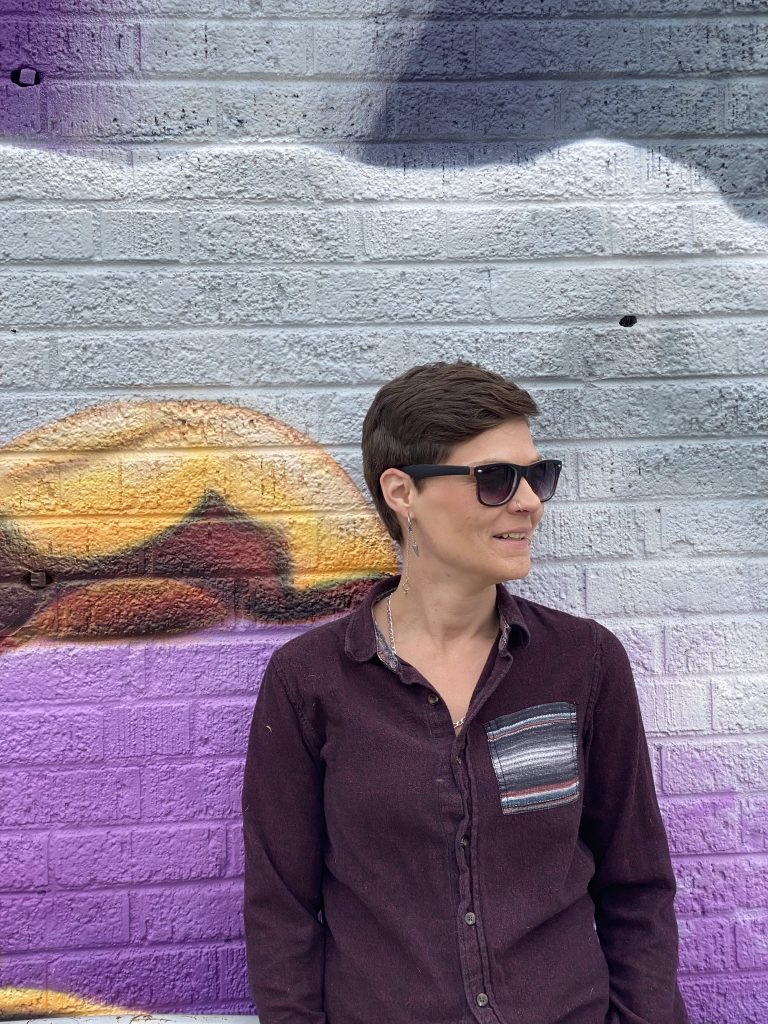
Seated in Ethos’ office in downtown Denver, Loren Brazel is sealing up packs of seeds while looking up the upcoming Cannabis Expo in Cape Town. The team is looking forward to traveling to South Africa, and she wants to make sure everything is lined up and ready. Brazel is the sales and logistics coordinator at Ethos, a term she uses lightly, clarifying that she’s here to help with whatever the team needs, whether a title fits that need or not.
Early Years
Loren Brazel was born in Newport Beach, California, to cautiously optimistic parents, as she describes them. She lived in Anaheim, California for around three years before moving to Vegas with her dad and step-mom in second grade. Eventually, she’d find her way back to California in the 8th grade, moving back to Huntington beach.
Brazel’s parents were “‘60s babies, ‘70s kids,” and her parents understood the appeal of cannabis, even in high school.
High School: Introduction to Smoking
Brazel’s first encounter with cannabis came in high school, smoking out of an apple when she was 16 or 17 years old. “I did it and went to school the next day and it was all I could think about, the taste. I don’t even think I got high, it was just the art of doing it,” she recalls.
After telling an older friend in the neighborhood about her apple experience, Brazel’s friend sat her down and said, “You are going to smoke out of everything right now,” and proceeded to lead her through smoking a bong, a blunt, a pipe, etc. so that she wouldn’t get handed anything at a party that she hadn’t seen.
ALL DAY.
Brazel’s preference for smoking: All day.
“That’s honestly what I think got me through high school, because my parents tried to put me on Wellbutrin … At that time, Ritalin was just being known to be bad for kids, and [Wellbutrin] made me like a zombie.” Conversely, when she smoked cannabis, she didn’t feel the need to take the prescriptions.
“I dropped out of regular high school; I would only show up for sports, softball and basketball, and they finally caught on and they kicked me out with a 0.62 GPA, and that was just for the sports I did.”
After dropping out of high school, Brazel did continuation school and even managed to surprise herself with a 3.4 GPA without prescriptions.
“All I was doing was smoking and these big packets [of coursework] for credit ... I would do 5 packets for 5 credits, and I’d bring in 10 packets each week. I’d get super fucking high and just sit there and get it done. I ended up graduating with a 3.4 and I never tried those pills ever again …Now, 20 years later, they tried to give [the same drugs] to me to quit smoking cigarettes. Bitch, I told them straight up I’m not taking them,” she laughs.
Brazel eventually got her first medical card from a doctor for a cool $300 (significantly more than most patients pay these days), moved to Long Beach, and lived there for almost 10 years before heading to Denver.
From Volunteer to Minimum Wage
“When I started going to dispensaries,” Brazel explains, “The people who were older than me would talk about dispensaries they went to in Long Beach, so I had them take me to one. I liked it. I didn’t know what to expect, but I kept going back.” She eventually made friends with the managers who would kick her a free joint every so often.
Shortly thereafter, Brazel started volunteering at the dispensary in exchange for free weed (anywhere between an 8th and a quad a day), mostly rolling joints and getting a taste for the business. In six months, she’d proved her worth and the dispensary started paying her as a budtender.
She made $6.25/hour in cash under the table.
“Having a pay stub at that time didn’t really exist for the weed industry. Stores would get shut down regularly by the city or state of California, and Proposition 215 (the initiative legalizing medical cannabis in California before Proposition 64 legalized adult-use) was still a grey area. We’d get shut down and then be closed for a few months. We have to sell pounds on the side until one of us would get hired and then get the whole crew hired.”
Josh Howard & Chris Cantella: The Guys that Put Me On
Brazel’s crew was made up of a handful of skilled workers who knew the California cannabis industry firsthand, including two people who would change her life forever: Josh Howard and Chris Cantella.
“Chris Cantella was a huge person in the early days of my career. I’ve known his son, Hayden, who now works with us at Ethos, since we were 16. His dad Chris took me in and showed me the ropes in the grow. Josh taught me the hustle, Chris lit the fire for growing. He recently passed away, and I named my dog after him, to always adventure with me; LeeRoy OG Cantella Brazel.
“I jumped right into the industry out of high school because I believed in it,” Brazel continues. “I believed in the medical side. I never got paid a shit ton. I just believed in it. I worked 13-hour days 6-7 days a week sometimes. I didn’t think about it. Now, when I hear people complain about anything less really, it just pisses me off.”
At 21 years old, Brazel was living with Howard in the back of the dispensary he owned in Signal Hill, an enclave inside of Long Beach.
“We would sleep on an air mattress in the break room, wake up before security got there, deflate the air mattress and brush our teeth. I kept my clothes in my car and then I worked. During lunch, I’d go take a shower, get lunch and come back before closing the store. Then, we’d get dinner, get fucked up, come back, and do this over and over again.”
“[Josh] was the guy that gave me the chance volunteering and eventually talked the boss into paying me minimum wage ... Most of what I learned from hustling was from him.”
Brazel, Howard, and the crew lived like this on and off for about five years, going from dispensary to dispensary, illegal grow to illegal grow, and even heading up annually to NorCal for Croptober for a month or more.
A Short-Lived Sabbatical
“I got tired of it,” recalls Brazel of the regular raids and associated risks. She got out of the grow and into wholesale distribution of G Pens and glass, allowing her to keep her toe in the industry without the ever-present threat of a shut down.
“That was my first pay stub. Six years after I started in this industry. Anything before that, I’d put my best friend down as my reference and we’d make fake pay stubs to get housing because it was impossible [in cannabis] to prove that you made enough.”
Unfortunately, her time at the distribution company was short-lived and the arrangement didn’t work out, so she did what she knew best: went back to working illegal grows. But, with the heightened stress of getting raided, she was looking for other avenues, and eventually would seize the opportunity to move out to Denver.
The Crash
Before this move however, a life changing car accident would brings these plans to a screeching halt.
On October 4th, 2009, Brazel was involved in a car crash that almost killed her.
“I fell asleep at the wheel and hit a pole going 80 miles per hour. I fractured my right femur, patella, right cheekbone and eye cavity, and now have a titanium bar hammered into my femur, and titanium eye socket and cheekbone. …Some guy came out of Starbucks and thought the truck [I was in] was going to explode and pulled me out through the windshield, which could’ve killed or paralyzed me, so miracle #2.”
Once in the ambulance, the paramedics decided to take a gamble on the longer journey to a trauma center 11 minutes away for immediate leg surgery. “Another little gamble that I survived,” Brazel adds.
She woke up from leg surgery not remembering a thing about the accident. “When I woke up, my mom was white as a ghost. ‘You got in a car accident … They just did your leg surgery.’”
Brazel wanted to go home and heal from there, but the doctors told her that she still needed facial surgery. “As a 21-year-old girl, the leg was no big deal, but the face … I freaked out. The nurse had to come calm me down ... I didn’t have insurance. I got admitted on a Sunday morning and was released on Friday. I asked the nurse how long I’d be here with insurance in my condition and she said at least two weeks … because I didn’t have insurance, their job was to stabilize and get me going … It was an interesting six days.”
But the healing process would prove to be even more interesting.
Brazel didn’t get to choose her plastic surgeon; whoever was on duty got the gig. But her doctor was very understanding and saw her on a weekly and biweekly basis, giving her facial exercises to help with healing. The nerves on the right side of her face were “hanging by a thread,” and to this day the lips and teeth on that side are “tingly at best.”
The first return visit to the leg doctor brought with it more hardship: removal of the staples was going to cost $500.
“I didn’t have that kind of money, especially after an accident and being out of work for 2-3 weeks already. I remember sitting there crying, thinking, ‘Can a doctor really do this?’”
Brazel’s mother talked the doctor into at least taking the staples out before leaving the office, never to return again.
“Physical therapy was not really a thing for people without money or insurance,” Brazel explains. “I found someone through the grapevine … someone who was going to school to maybe do physical therapy … that was the best plan. I started later than I should have, 7 months after the accident and I couldn’t bend my knee. I’d have to sit in front of every car or in the middle of the backseat so I could put my leg on the console through the front seats.
“No running, no bikes, etc…I did that for a year and a half. After 2 months I kept asking Josh to let me come back to work. He was giving me meds (flower and edibles) for the week and telling me that I had to heal. When I proved to him that I was going to this knock-off physical therapist and I didn’t have to be in a wheelchair all day, I could go back to work. I have a picture in a walker where I am vacuuming the place, just showing him I can work.”
Brazel slowly got off the walker but still could not walk well. After a year and a half of slow healing, she eventually found some government assistance insurance, applying immediately and qualifying. She then tried to get leg surgery, which was approved, and the screws were taken out of her knee before she was sent to an actual physical therapy clinic.
“I can bend [my knee] much more now; a 90-degree angle versus like 170-degree … when I felt the stretch of that top muscle on my thigh, I started crying. It was a huge accomplishment. I never thought I would feel that stretch again. I could horribly ride a bike, I could sit in the back seat of the car, things I hadn’t done from 21-23 years old … lying in bed proved to me how bad I wanted to go back to work.”
So, Howard put her back on the clock. But before too long, the business was shut down again.
Amsterdam Cannabis Cup
While she was recuperating, Brazel made the pilgrimage to the 2009 High Times Cannabis Cup in Amsterdam with a roommate whom she had met on craigslist.
“I went to Amsterdam in my wheelchair … I’d already paid for my trip and the doctors were saying 99% of people with my injuries die, and I lived. So, why not go?”
One and a half months after her accident, and against everyone’s advice, Brazel headed to Amsterdam.
“I was like, I’ll just crutch around … I did that for like 15 minutes but hadn’t practiced so I had no upper body strength, so I was in a wheelchair all week. We met these guys with judges’ passes to the cup and they had judges passes which they could just get replaced. It was all rainy and cobblestones in Amsterdam, and I’m in my wheelchair drenched just bickering, trying to find a coffee shop to get high.”
The plan was to take trains and walk while traveling to cut down on costs, but the rain and Brazel’s recent injuries prompted them to try to get a taxi.
“So, we get high, come outside, and we are waiting for a cab thinking, ‘Let’s not spoil this day. Let’s just get there and have a good day.’ And this white Mercedes van stops at the light. It had a High Times Cannabis Cup sign duct-taped to the front. I started cheering from my wheelchair. They rolled the window down and asked if we wanted a ride. We’re like fuck it, I couldn’t put any weight on one leg, so they put me in the van, put my wheelchair in the very back of the van, and we are just driving around the city, picking up people from different smoke shops, handing us nugs, telling us to roll things, not paying attention, and then just all at once, we are at the cup.
“We got so high that we had to take a break to sit down and rolled a joint to take a break from smoking at each booth. Then, we go to leave and of course the van isn’t outside. We go up to this group of guys that don’t speak any English … we get in [to a new van]. There’s two guys in the front who put my wheelchair in the back. This ride is completely silent and I don’t recognize anywhere we are going, thinking, ‘Shit, Loren, this is probably how hostel gets their victims.’ … Maybe 20 minutes later they dropped us off and nothing happened,” Brazel recalls of their luck not running into issues.
While in Amsterdam, she primarily enjoyed flower and edibles, and she thinks that the edibles are what helped her with the recovery. “I don’t like taking pills … I obviously had to at certain times, but edibles helped me sleep longer without having to take more pills.”
Years later, Ethos COO Riley Breiner would also accompany Brazel in a wheelchair (unrelated injury) on their trip to Prague, but, Brazel laughs, “There was less bickering on that trip.”
Mile High Moves
In 2014, after 10 years of living in Long Beach, Brazel had the opportunity to move out to Denver and took it. “I told myself I was moving out here for six months to a year to see what the industry was like,” Brazel recalls. “July 2021 marks seven years.”
Upon arrival, she immediately applied for her MED badge. It took two weeks to get her badge, after which she secured her first Colorado budtender role at Mile High Cannabis. This would also be where she’d meet Colin Gordon and Riley Breiner.
“Through quick networking here, I met Colin right when I moved here in 2014,” Brazel explains. “Colin and I hit it off and he wanted to start this consulting company, The Ethos Collective. He offered me a job as his personal assistant. So, I put in my two week notice at the dispensary and started working for Colin.”
The Ethos Collective
“For about 1.5-2 years, we went around to different sized commercial grows ... from little warehouses to big greenhouses …and helped them get their stuff right,” Brazel recalls. “That’s where the famous Ethos Cookies strain came from ... I was there that day.”
As time went on, a shift towards genetics seemed inevitable.
Gordon had mentioned to Brazel before that he had wanted to create a genetics company and had been messing around at his house making a few strains. “I learned the very basics of genetics and breeding: what it takes to breed, the difference between using gibberellic acid versus colloidal silver … I learned quite a bit from him during that process.”
Through this process, Gordon and Brazel would put together the first seeds produced by Ethos.
The 2015 Denver High Times Cup
The Ethos Collective would drop their first packs at the 2015 Denver High Times Cup, many of which sold out immediately. After seeing the success of their efforts, Gordon and Brazel would continue doing small seed drops for 6-12 months before honing in on genetics as the company’s primary offering.
“Colin and I did the Denver Cup. We had a basic design on the packs, and we did what we could … we started with just a couple hundred packs and they sold out.”
“I lost my voice, for sure,” Brazel laughs. “[Colin] was kind of in charge of the seed side and two other people were doing hand over fist seeds for money. I was next to him running a little crew. The goal was to sell out of seeds but the goal was also to make waves. At that time, getting in High Times Magazine was what you wanted; The goal was to win best booth. So, we are doing raffles every hour, we are screaming, we’re giving shit out, and we ended up selling out and we got second place best booth.”
As Brazel recalls, they took second to another booth that hadn’t even shown up; The Ethos Collective and RX Green Solution booth was nearby The Green Solution, who ended up taking best booth without anyone in attendance.
“We partnered up with [RX Green Solution] and the way you look up the booth to vote on your phone, we were right under The Green Solution. We were under them on the list. They didn’t even show up. Not one of them. So, many people hit them instead of hitting RX/Ethos.”
“This second place best booth thing has driven me crazy for years,” Brazel concedes. “So, years go by, Riley and Colin start doing shows again, and they are winning for different things, and I start jumping on again and doing shows. I told them, ‘If we get first place best booth at a High Times cup, I need one, I need to make up for the mistakes made in Denver.’”
Brazel would finally get that chance at retribution in Detroit in 2018, where the team would take home first place.
“I finally got my first place, even though I know in my heart we won it [in Denver].”
Access as an Assistant
Most notably, though, was the access that being Gordon’s assistant afforded her. While many had to secure time to speak with Colin or pick his brain, Brazel had direct access daily. In addition to knowledge and technique, she also gained access to better pricing and equipment for use in her own pursuits.
“Being Colin’s personal assistant gave me a lot of access to him directly,” Brazel explains. “A lot of people paid $375/hour to have him come into your grow and tell you how to fix it ... Having that access was invaluable, [as was] having access to grow equipment at cost.”
“At that time it was DE bulbs, CO2 and other revolving expenses like nutrients, lights, soil, buckets, tomato cages … that’s so much money to start up. I started up and turned on with two lights, but [as Colin’s assistant] I had 14 brand new DE lights.”
First 14-Lighter
While working with Colin, Brazel also started her first Colorado grow. With millions on the line and hundreds of pounds to legally manage, she’d learn firsthand why many busy growers don’t harvest an entire room at once.
“I think the most I had was 75 plants [that was my EPC] ... That’s a lot of fucking work,” Brazel emphasizes. They were growing Black Fire and Colin OG. She’d started with two lights, eventually cloning those plants and then putting them under flower lights, 4-6 lights at a time, until eventually all 14 lights were on.
Brazel laughs as she points out that she has since moved to a staggered room with perpetual harvests, chuckling that Gordon would come in and ask her why she decided to try to harvest all 75 plants at once.
First Time Breeding
In addition to learning how to schedule her harvest, Brazel also learned the basics of cannabis breeding through her work with Gordon. Chuckling, she recalls her first time breeding outside of Gordon’s old home and their encounter with bees.
“[Colin] got stung by an African bee on top of his head … We were outside in his backyard and he was pollinating, and all of these worker bees were around. ‘Just let them do their thing,’ he said. We kept working and then the worker bees were gone and really aggressive bees were around … It was a hot summer day and I was working in a bathing suit top with a work belt. One stings me above my shorts line on the back and he got stung on his head and we were done for the day.”
Sweet Leaf: Moving Weight
While work with Ethos was great, the infancy of the company also meant that some weeks were tougher than others financially. Eventually, Gordon would have to let Brazel go due to lack of budget, and she went looking for other employment, finding the Sweet Leaf dispensary chain.
“I ended up taking a different opportunity with Sweet Leaf and became the inventory manager there,” Brazel says. “I would go to various stores and check all the variances of inventory”
Over time, that role evolved into more of a wholesale director, and Brazel worked directly under Sweet Leaf’s owners.
“At that time, I was buying all that wholesale, at work, buried in literally hundreds of pounds … we’d have 400 pound days and you have to make sure it’s manifested somewhere. As restrictions got more and more, you had to bounce it through the store, it got so much more intense.
“I would purchase all of the marijuana for all of the stores. I think yearly I had a budget of like $16.1 million ... I had to get an assistant to help me go through all that weed.” Her assistant at the time, Christian Guedeney, also now works at Ethos.
Together, they would intake product, weigh and separate batches for each store, get ready for the next day, and then come back in and do it all over again. Due to the sheer volume of product being purchased, Sweet Leaf had an unprecedented control over wholesale pricing and supply.
“It was crazy to have that kind of control over the market ... Because we were buying at that volume, it was name your price. I’d take it all at the price that I wanted it for ... When I started buying the weed, it was like $1,400 [per pound], the highest best stuff was $1,600 … by the time Sweet leaf had the first raid, I had the best weed at $900 a pound.”
That control of the market would lead to instability in Colorado’s supply chain when Sweet Leaf was shut down.
“[The raids] messed the market up for a minute. There was so much weed, but we were expected to take it from basically everyone. Even though we were growing, it wasn’t enough. I was buying 100 pounds a week and that still didn’t satisfy it. We were ramping up all of these growers and grows and then one day, boom, it was over.”
“Honestly, I thought I would be part of Sweet Leaf raids,” Brazel confesses. “My name was on the manifest. We were within Metrc, and my part was legal … but to have my name on that was like ‘oh shit’. When all that went down, I was out of a job for a few weeks ... A small group of us were selected to go back … we went from 100s of employees to maybe 40 … trying to cover the work hundreds were doing, that a handful were now doing.”
For Brazel, the experience brought back memories of her first raid in Long Beach. Nichole West (who also worked at Sweet Leaf) worked with Brazel previously in California when Brazel experienced her first raid.
“Nichole West was at the door pretending she can’t buzz the door in so that we could put all the money and weed in the safe,” explains Brazel. “We yell ‘Clear!’ Then they get buzzed in before they ram the doors ... Sweet Leaf being the second raid, I flashed back instantly after the security guard told us all the stores were raided … I threw money in the safe, and even though no one is around me, I yell ‘Clear!’ ... No one is moving, they’re standing around ... no one knows what to do. We have to clear the grow and they are just sitting there.”
“All the people that didn’t get caught or people who weren’t sitting there with the cops, we all met at a Chipotle, all freaking out and getting drunk at 9 a.m.,” Brazel recalls. “It was crazy; I thought I moved here to not get raided any more.”
Green Dot
After the experience, Brazel was offered the chance to work with Green Dot Labs, a well-known Colorado concentrate company. While she was familiar with cannabis, working in the concentrate space was entirely new, but her experience with operations and management would prove to be her biggest asset.
“Almost immediately after I applied for Green Dot, I started working there …it was a whole new space, a whole new experience, but I tried to bring my logistics [knowledge] that I learned over the years, mostly at Sweet Leaf’s nine stores … I used that to manage two different departments up there [at Green Dot] … It was a very cool experience; I’d never worked in the hash space before.”
While working with the Green Dot team, Brazel also began traveling with Ethos, working trade shows like High Times, NECANN, and Cannacon.
“[Green Dot] let me travel to shows with Ethos, sometimes leaving early on Fridays to catch my flight. Mondays, when I would get home, I would land and drive myself to Boulder and work all day. That meant Green Dot Monday through Friday, Ethos shows Saturday & Sunday, then Green Dot Monday through Friday. 14-19 day work stretches were gnarly but kept me sane.”
As the commitment grew and the role with Ethos became more serious, Brazel’s time with Green Dot would come to a close, and Gordon would eventually hire her full time (again).
“It’s come full circle,” Brazel reflects. “It evolved from a consulting company looking to expand into consulting in multiple states … [but] consulting is finite … the goal [of consulting] is to help customers to where they don’t need you anymore. At some point, there was a pivot where we went the direction of seeds.”
Weed, Dogs, & Ethos
“I’m stoked to be here … I’ve been to Jamaica and Prague, and we are setting up to go to South Africa this year,” Brazel brags of the travels she has enjoyed as a part of her current role with Ethos. She’s not a boastful person, but there’s a pride in the recognition of what it took to get to where she is today.
“I started when I was 18 ... I’m almost 33 now … It’s been a long road … a good portion of that was budtending, for years, which is why it is hard to hear people complain about budtending for six months and not being a manager. I used to work six, seven days a week. I’d open and I’d close ... Yeah it sucks because you’re at work, but you sell weed … It’s not that bad. Some days are worse than others, but it’s what you make of it … I’ve given myself bad days for no reason, but we are just lucky to be here.”
A positive mindset, and a determination to constantly be learning and improve, helped to impart the knowledge necessary for Brazel to excel at a company that also allowed her another joy: the ability to work in a dog-friendly office.
“I’ve always wanted to pair weed and my dogs, and I finally did that … Especially in California, even here, most dispensaries, you’re locked in a building within a building, so you only see outside on camera monitors … 8 a.m. to 9 p.m., six or seven days a week, that’s how you see outside, and no dogs allowed because of health hazards … Dexter (Brazel’s 10-year-old companion) was in the kennel for 12 hours a day, only to have someone run over and let him pee and put him right back in ... Especially for him, I wanted to promise him I wouldn’t leave him for 12 hours a day, six days a week.”
Professional Validation
Along with the pride and sense of contentment that came with a dog-friendly position came a sense of validation after years of working in an industry that’s historically more difficult for women.
“Being a woman in this industry, even now, is difficult,” Brazel says. “We deal with emails that are ‘dude’ and ‘bro’ … and it’s not a big deal, but it is assumed that you are a man ... Even 10 years ago, making your way in this space was difficult.”
In 2018, Brazel decided to test her credentials in a new market and applied for a job in Hawaii. Her ex was originally from there, and, as she puts it, “Who wouldn’t want to live in Hawaii? It’s a dream.”
After going back and forth for months about the opportunity and her career path, Brazel completed her final interview and stated her intention to start in Hawaii in a few months. But after a trip home and some financial considerations, she decided to stay in the Mile High.
“I went back home three months before I was supposed to start. I came back here and I couldn’t do it. I couldn’t leave Denver. I couldn’t leave the industry here ... What they were offering to pay in Hawaii was great anywhere but Hawaii. I was finally getting to a place where I wasn’t going to financially struggle, so I made the decision to stay, and I’m totally glad I did.”
Without question, Brazel found her experience in the industry and career path validated.
“Now I know that my resume and my experience is valid and is worth something to people. I got that opportunity with no friend of a friend introduction. That was just me going by myself and getting the opportunity. That validated my experience and all that hard work.”
Additionally, Brazel is proud that she didn’t have to compromise her integrity or hide her true self to succeed.
“Internally, looking how I look and my orientation, it kind of makes me more validated that in no one’s mind did I ‘sleep up’ the ladder … That’s the typical way women get up the ladder ... It feels good to be where I’m at today with hard work.”
From her first Denver budtending job with Breiner at Mile High Cannabis to coming full circle and working together at Ethos, Brazel’s career is proof to family and friends that it is possible to have a profession in cannabis.
“My mom is gone, but my dad has seen how far I’ve come ... The day I got a real pay stub from a real weed company, not a distributor but actual weed ... I showed my dad … I have insurance, what’s up?!” Brazel laughs. “I went through almost 27 years until I had health insurance ... My GF just started a weed job with health insurance and eye and dental at $15 an hour ... Back in the day you had to call your homie to be your landlord reference.”
Gender Balance, Ethos, And The Industry At Large
As more job opportunities become available and conventional compensation models come into play, more women are entering this traditionally male-dominated space, helping to offset the gender imbalance. But that hasn’t stopped some from trying to take advantage of new markets with large paychecks and big talk.
“Gender balance is a newer learned trait for the industry,” explains Brazel, going on to say that each new market goes through the same growing pains: half of the new market is legacy growers, half is what Brazel calls the “go get ‘em” guys.
“In any state that goes rec or med, there’s that group of people who grew illegally ... They will step out and say, ‘I’m the best. Give me your money, give me investors’ ... They typically fail 80% of the time. They don’t have the experience … [Then you have] the ‘go get ‘em’ guys. They will take a half million dollar salary while everyone makes pennies, and trash the company. They have to recover or start over.
“I don’t have a degree in business, but I have an understanding of this business, of marketing to the customer and wholesale relationships with clients … On the grow side, I can consult … Now, I hire someone like [me] … instead of giving them a bogus salary, I say, ‘You make pennies at your other job; I will give you nickels. That’s how I worked my way up ... Even as wholesale director of Sweet Leaf, I wasn’t making $1,000 per week, but it was a level up.”
It wasn’t until coming back to Ethos that Brazel saw the reward for her years of effort.
“People respect my lane here, Colin and Riley … I do travel and shows and customer service. They respect my opinion, not because I’m a woman but because I’ve been in this for years … It’s a newer trait for the industry, and it’s because now people are taking a step back and not believing the ‘go get ‘em’ guy, they are believing the person who has the resume for it … I’m all about ‘you get what you give.’ If you are going to pay someone pennies, you are going to get pennies’ worth of work ... You have to deserve to get more ... You can’t just work 60 days and then wonder why you aren’t the manager.
Beliefs over Profits
Brazel speaks highly of Gordon, Breiner and the Ethos team and the prioritization of people over profits, ideals over margins, and now applies those principles to her work with the Multipass.
“I came on about six months after the Multipass launched, right when the first box dropped,” she recalls. “Riley was doing all of it and gladly shared the workload … We try really hard to make sure all of these people have the answers they need.
A Professional Relationship with the Plant
Brazel says that her professional path from black market budtending to logistics coordinator for one of the world’s biggest genetics companies has only enhanced her relationship with cannabis.
“It’s only made it more intense,” Brazel explains, “Because I still believe in the medicinal value of it … Now, some of my thoughts and theories or what I’ve learned from other people in the early days, some of that is coming true, coming to fruition to some degree. Now that we can have studies on it, we will know more as time goes on and legalities change … I’m so excited because this is exactly why I got into it ... Now it supports my lifestyle and makes my dreams come true: travel and weed ... Prague and Jamaica with Riley, traveling all over the country with her, and now I bring my dogs to the office every day ... All those things have come together … My profession has intensified my relationship with the plant.”
Cannabis Myths
Having been in the industry so long, Brazel has seen her share of misinformation. Rather than shopping by THC percentage, she encourages people to find the genetics they like and go from there.
“[THC] percentage doesn’t matter ... To a degree, percentages matter when people are buying cannabis, but, like I said, I like the OGs, and the OG lineage and the family … I like that lineage, so for me it doesn’t matter. I could smoke a 20% and get just as high as a 12%, but then I’ll get a fruity something that is in the 30% and I’m disappointed ... Find the genetic that you like and go with that.”
“Because I’ve bought so much weed, at Sweet Leaf but also in Cali, your eyes, hands and nose work through a lot of weed. I can see through a bag when it is OG. It’s just the structure of it. If the store has the genetic I like or the lineage I like, and it doesn’t look larfy, which really anyone can tell, I’ll buy it. If it looks like an OG, I’m going to buy it, and I’m going to probably fucking like it, even at an 18%.”
Work Hard & Be Honest
The one piece of advice Brazel offers is not to be the stereotypical, lazy, late stoner. Instead, prove the stereotypes wrong.
“People like me smoke all day,” she says. “I don’t have a degree ... My disadvantage was being young and a woman and gay because I couldn’t use myself or anything besides my brain to advance myself ... If there’s extra shifts, pick them up. If the trash is full, take it out. Set an example. Once you are a manager, stay that example; Take the trash out still. People look up to that.
Don’t be late, work hard and be honest. That’s literally never steered me wrong.”
Subscribe to our Substack to receive new content automatically
This article is featured in Vol. 2 of The ETHOS Magazine.
Grab a collector's edition of the ETHOS magazine in print HERE.